Children playing sport together
Open Mon–Sat

In-Toeing & Out-Toeing Treatment in Melbourne

Professional assessment and correction for pigeon toes, duck feet and curly toes in children.

Open Mon–SatHICAPS AvailableAHPRA-Registered Clinicians3 Melbourne LocationsSports-Focused ExpertiseEvidence-Based CareNo Referral Required15+ Years ExperienceOpen Mon–SatHICAPS AvailableAHPRA-Registered Clinicians3 Melbourne LocationsSports-Focused ExpertiseEvidence-Based CareNo Referral Required15+ Years Experience
In/Out Toeing & Curly Toes

In-toeing (pigeon toes) and out-toeing (duck feet) are conditions where the toes point inward towards the centre of the body or outward away from the midline. These walking patterns can affect your child's balance, coordination and long-term development.

While mild changes are common during early development, by ages 4-5 you should expect the toes to be pointing straight during standing and walking. If they are not, early assessment and intervention can make correction much easier than waiting until late adolescence.

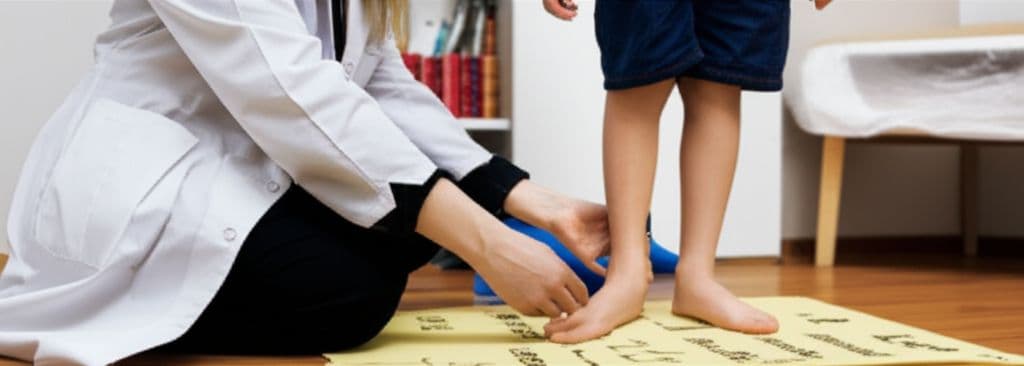
Podiatrist assessing a child's foot alignment

We Accept All Major Health Funds

HICAPS on-the-spot rebates at all clinics. No referral needed.

Book Appointment
AAMI
Medibank
Suncorp
Health Insurance
Frank
Bupa
HCF
Allianz
When Should You Be Concerned?

There are specific signs that indicate your child's in-toeing or out-toeing may need professional attention. These walking patterns are much harder to correct in late adolescence compared to early childhood.

  • Looking from behind, you can see the outer 2.5 toes of your child's foot
  • Your child has hypermobile (flexible) limbs and ankles
  • Legs point straight but toes still point inward (metatarsus adductus)
  • Legs are heavily rotated causing feet to point inwards or outwards
  • Frequent tripping or falling during walking or running
  • Toe walking pattern persisting beyond toddler years

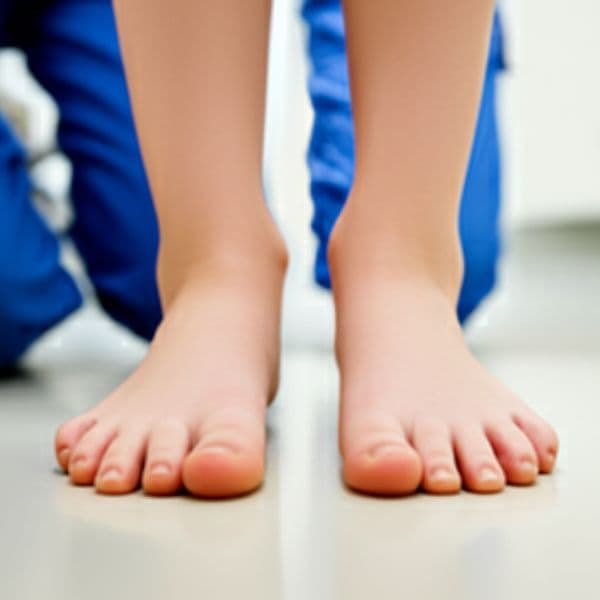
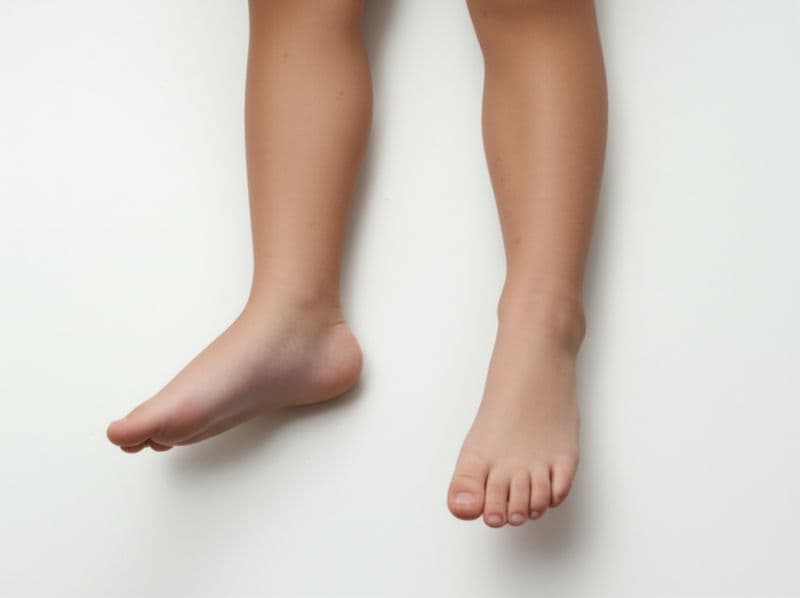
Child's feet showing in-toeing pattern
Contributing Factors

Why Is This a Concern?

In-toeing and out-toeing are not just cosmetic concerns. They can lead to altered stresses on developing bones, imbalances within the body and difficulties with coordination and athletic performance.

01
Altered stress on developing bones in the foot
02
In-toeing correlates with increased ankle rolling and tripping
03
Out-toeing increases pressure through the arch, medial knee and lateral hip
04
Habits become much harder to correct in late adolescence
05
Can lead to long-term imbalances if left unaddressed
06
May affect confidence and participation in sports
Our Assessment Process

We start by identifying the level of severity and where the rotation is occurring - at the foot, the leg or the hip. This helps us create the most effective treatment plan.

  • Severity assessment of in-toeing or out-toeing
  • Identification of the source of rotation
  • Walking vs running pattern analysis
  • Assessment of joint flexibility and muscle strength
Steve Singh examining a child's foot alignment

Why Choose MSP?

We combine clinical expertise with a patient-centered approach to get you back on your feet.

Book Your Appointment

Sports-Focused

Decades of combined experience treating foot, ankle, and movement concerns.

Evidence-Based Plan

Every plan is guided by proven research and tailored to your lifestyle.

Preventive Approach

We focus on identifying risks early to keep you moving comfortably.

Convenient Clinic Locations

Easily accessible clinics in Brighton, Richmond, and South Melbourne.

Collaborative Care

We work with your GP, physio, or coach for consistent recovery support.

Easy HICAPS Claims

Simple, instant health-fund claiming at every appointment.

Treatment Options

Treatment focuses on correcting the walking pattern through a combination of exercises, footwear modifications and gait retraining. The earlier we start, the more effective the correction.

Exercises and skills activities for habitual walking pattern change
In-shoe modifications to redirect foot position
Gait retraining for walking and running patterns
Strengthening exercises for supporting muscle groups
Self-Care Guide

Early Intervention Matters

These walking patterns are much easier to correct during childhood and early adolescence. Waiting too long can mean the patterns become ingrained and more difficult to change. Early assessment gives your child the best chance of healthy, balanced development.

1

Seek assessment if concerned about your child's walking pattern

2

Follow prescribed exercise programs consistently at home

3

Wear recommended footwear for school and sport

4

Encourage varied physical activities to build balanced strength

5

Book follow-up appointments to track progress

6

Do not assume the problem will resolve on its own

Consultation Fees & Rebates

No referral is needed. Our clinics accept most private health rebates, Medicare (with eligible referrals), TAC and WorkCover.

Frequently Asked Questions

Some mild cases may resolve naturally by ages 4-5. However, if the pattern persists beyond this age, professional intervention is recommended. These habits become much harder to correct in late adolescence, so early assessment is important.
In-toeing (pigeon toes) is when the feet point inward while walking. Out-toeing (duck feet) is when the feet point outward. Both can originate from the foot, the lower leg or the hip, and each requires a different treatment approach.
Yes, both conditions can affect balance, coordination and athletic performance. In-toeing tends to increase ankle rolling and tripping, while out-toeing increases pressure through the arch and knee. Treatment can help your child move more efficiently and confidently.
No referral is needed. Book directly with Melbourne Sports Podiatry at our Brighton, Richmond or South Melbourne clinics.

Our Clinics

Three convenient locations across Melbourne. Choose the clinic closest to you.

Call: 1300 332 201
Brighton clinic

Brighton

110 Bay Street

Richmond clinic

Richmond

329 Lennox Street

South Melbourne clinic

South Melbourne

3/186 York St